
Turning a 2019 Dream into a 2026 Reality: The Future of Web-Native 3D
Explore the journey from 360-degree flat panoramas to fully interactive, web-native 3D Gaussian Splats streaming seamlessly in the browser. Ayush Banerjee explains the volumetric cloud pipeline compressing 937MB of spatial tracking data into a lightweight 40MB stream.
Date
June 9, 2026
Author
Ayush Banerjee
Read
12 Min
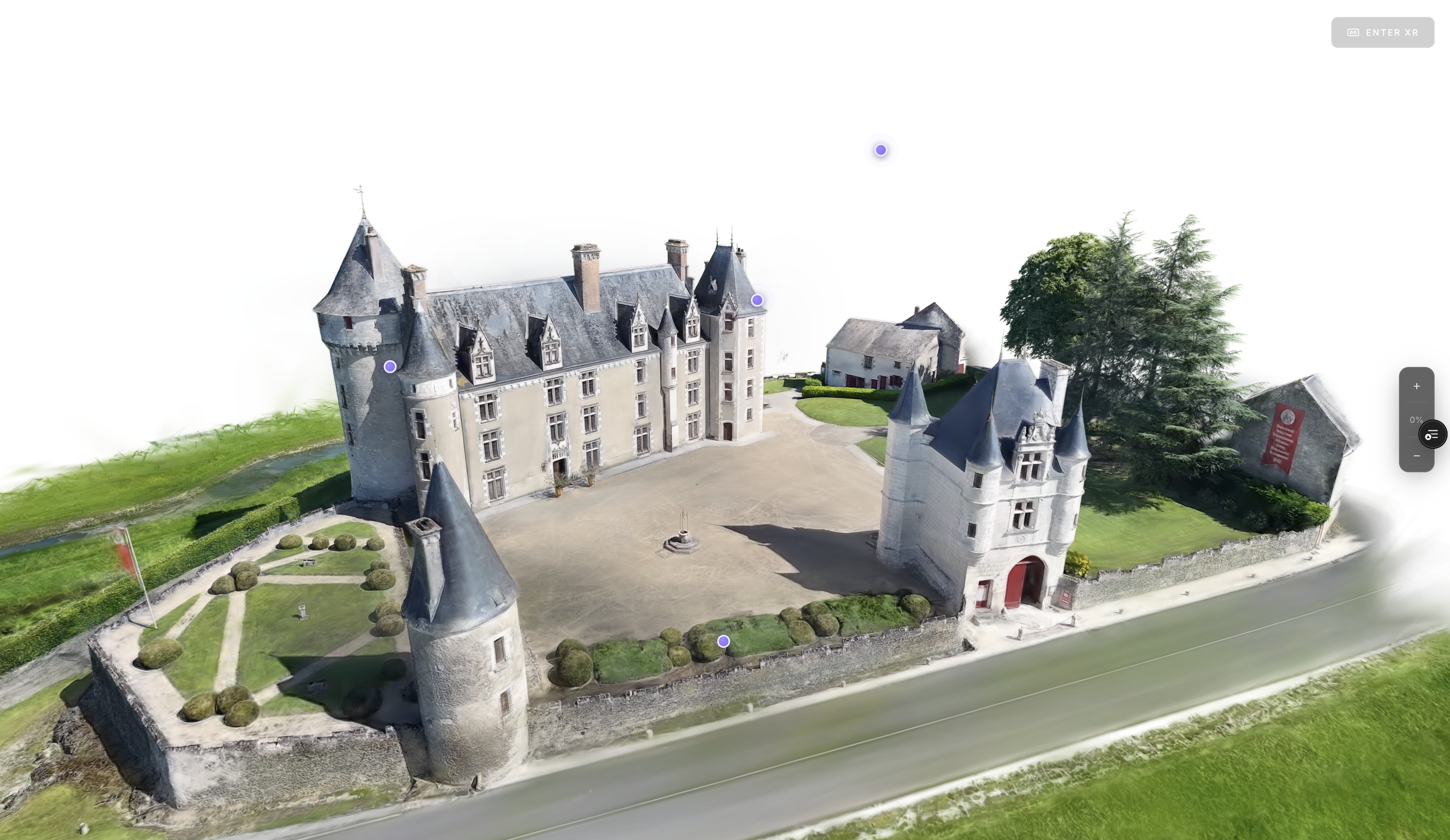
Turning a 2019 Dream into a 2026 Reality: The Future of Web-Native 3D
In 2019, while building 360-degree virtual tours in the fast-paced real estate and hospitality markets of Dubai, a thought kept keeping me up at night:
What if a virtual tour didn't feel like clicking through a series of flat, disconnected panoramic bubbles? What if we could step into a living, breathing, web-native 3D digital twin?
Back then, rendering a photorealistic, fully interactive 3D environment directly inside a standard mobile browser—without forcing a user to download a massive application or rely on a high-end gaming PC—felt like an engineering pipe dream. The friction was too high, the file sizes too massive, and the computational rendering limits too rigid.
Fast forward to 2026.
What was once a distant concept is now completely real, functional, and live on the web.
The Breakthrough
Using nothing more than a standard, simple video file, the current state of spatial computing and 3D Gaussian Splatting has completely changed the game.
By bypassing heavy, traditional polygonal meshes and instead utilizing optimized volumetric cloud pipelines, I've successfully managed to train, optimize, and host a fully interactive 3D photogrammetry asset online.
• The Original Asset Weight: ~937 MB of raw, unoptimized spatial tracking data.
• The Web-Optimized Reality: Compressed down to a blazing-fast, lightweight 40MB .splat file capable of streaming right to a standard browser canvas.
• The Interaction Boundary: Complete camera constraint matrices built directly into the frontend code to keep user viewing vectors majestic, smooth, and perfectly grounded.
Why This Matters Across Industries
This isn't just a technical milestone; it is a fundamental shift in how brands will tell stories and design customer experiences moving forward. Groundbreaking digital execution is no longer gated by massive production budgets or specialized hardware.
• Luxury Hospitality & Real Estate: Guests can completely orbit, inspect, and explore a destination's architecture and layout before they ever step foot on the property.
• E-Commerce & Brand Strategy: Transforming static product showcases into deeply immersive, interactive spatial narratives.
• Portfolio Presentation: Moving past flat 2D imagery into high-fidelity web experiences that visitors can interact with seamlessly.
The bridge between imagination and production has never been shorter. If you have a camera, an idea, and the right workflow, creating something truly groundbreaking is no longer a dream—it's just a few processing loops away.
#SpatialComputing #WebXR #GaussianSplatting #ThreeJS #UXDesign #Innovation #BrandStrategy #TechJourney